Phage Producers
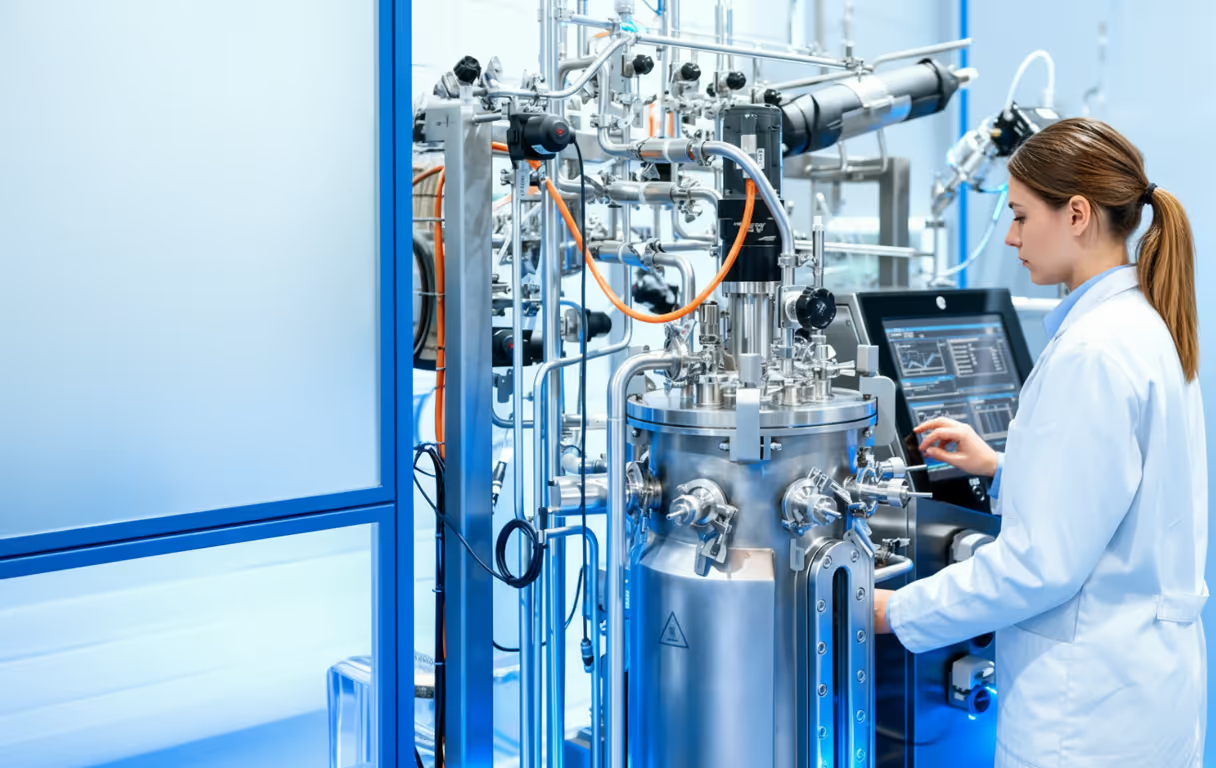
BatchQC is a genomic quality control platform built specifically for phage producers.
Phages break a lot of the assumptions that general-purpose genomics tools were designed around — circular topologies, terminal redundancy, cohesive ends, and more. Each one quietly distorts the QC numbers if your pipeline doesn't model it.
BatchQC does, and it also wraps your tiered production architecture into an easy-to-understand graphical user interface.
Why Phage Producers Trust BatchQC
Genome topology, modelled explicitly
Declare the packaging type on upload and the choice flows through mapping, variant calling and QC.
Host residue and controls, accounted for separately
Upload a host genome and any number of control genomes alongside the reference. Reads that map to controls are debited from the reference's mapping count rather than double-counted, and each control's contribution is broken out in the report.
One pipeline, three platforms
Illumina, Nanopore and PacBio in the same workflow. Mapping and ruleset thresholds are technology-aware, so the criteria you trust for a Nanopore lot aren't imposed on an Illumina one. Switch platforms mid-programme without rebuilding the QC stack.
Configurable, signed parameter sets
Mapping presets and 21 configurable quality rules encode your project's acceptance criteria. Both are versioned and signed, so every batch records the exact parameters it was judged against.
Bioinformatics QC

Sequence-level QC of a manufactured biologic batch requires more than read mapping and identity confirmation. Yet most in-house teams piece it together with bespoke scripts that work for one project and drift from there, increasing bioinformaticians’ overhead and introducing compliance risks.
BatchQC packages the pipeline into a validated, version-controlled system with signed-off rulesets and mapping presets that apply identically to every batch.
Why Bioinformaticians Trust BatchQC
Validated bioinformatics pipeline developed by phage scientists
Our purpose-built pipeline is validated using in silico and in vivo samples for Illumina, Nanopore and PacBio. We know what goes in and what comes out.
Configurable rulesets
No subjective decisions; our ruleset system uses 21 customisable quality thresholds covering all relevant QC questions from initial trimming and coverage assessment to variant detection and contamination control.
Configurable mapping presets
Phage genomes are diverse – fine-tune mapping parameters for your exact use case and sign them digitally.
Deterministic outputs
Tightly version-controlled and containerised under the hood. Any updates undergo internal change request processes.
Runs and reports in the same system
No need to export results to your colleagues for viewing and signing – everything is handled in the same user interface.
Quality and Compliance
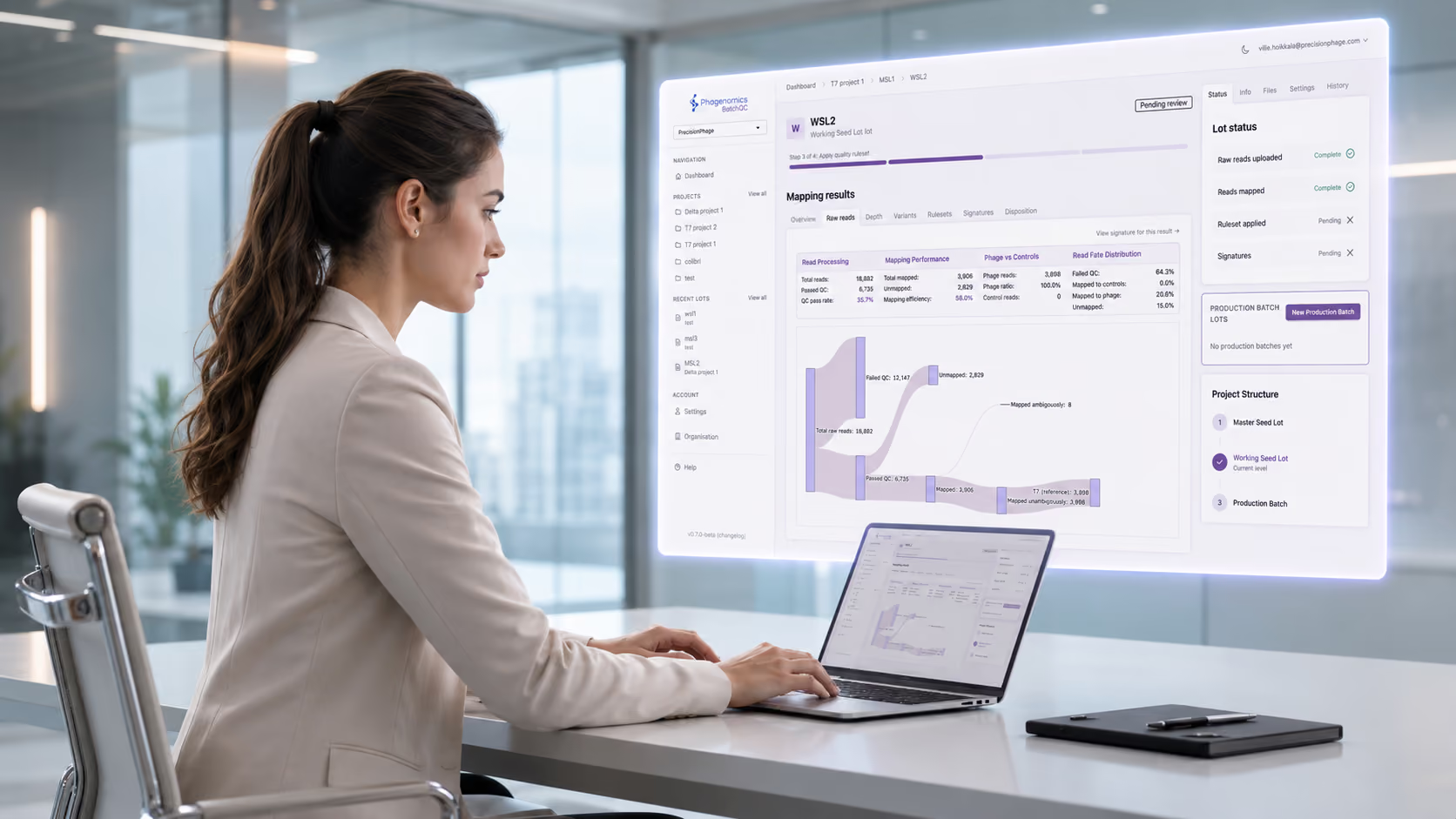
BatchQC is built to make audits boring. We follow a GAMP 5 Category 5 lifecycle, with risk assessments and signed test reports tied to every release. Annex 11, ALCOA+ and 21 CFR Part 11 are built-in to the platform, not delegated to your QMS to fill in. When your inspector asks, the evidence is already in the system.
Why QA Trust BatchQC
Signatures that hold up outside BatchQC
Signatures capture the signer, the role they held at signing time, a UTC timestamp, the signing intent, and a cryptographic hash of the signed content.
An audit trail your inspector can actually use
Every GxP-relevant change is recorded with user, action and timestamp, in a tamper-evident store. Export to CSV, PDF or Excel.
Roles on your org's terms
31 granular permissions, project-scoped role overrides and time-bounded signing delegations.
Separation of duties, enforced at the platform layer
Sign-vs-create conflicts can be blocked by the application, not left to SOP discipline. Review intervals, project access restrictions and MFA are configurable per organisation.
Validation evidence package, available under NDA
User requirements, risk assessments, mitigations, validation plan and signed test reports — all maintained inside our QMS and shareable for vendor-qualification reviews.
EU-hosted, ALCOA+ by design
Records, change logs and access controls implement the ALCOA+ principles in product behaviour, not as a separate compliance overlay.
Phage Manufacturing & Lot Release

Genomic QC moves from a multi-week scattered exercise to a deterministic and centralised platform decision. The Phagenomics BatchQC platform scales from a single-site small producer to a multi-client CDMO.
Why Manufacturing Trusts BatchQC
Disposition becomes a review, not an analysis
Every batch gets an automated genomic pass/fail based on pre-signed criteria. Your reviewer walks into the disposition decision with the analysis already done, not waiting for someone to assemble it.
Sign the work where it lives
The reviewer of each artefact signs that artefact as defined by organisational policies: a bioinformatician signs the per-result QC, a QC reviewer signs the genome and mapping-preset usage, the QA signing disposition inherits the chain. Every signature carries identity, timestamp and intent under 21 CFR Part 11.
The Certificate of Analysis falls out of the disposition signature
When QA signs the lot for release, BatchQC issues the Final CoA: a signed PDF that includes the disposition decision, every supporting verification signature, and the analytical evidence behind them. Drop it into your production management system as the batch's genomic record.
Maps onto your organisation, not the other way around
Roles, permissions, separation-of-duties policies and signing delegations are configured per organisation. Your release model — single-site producer or multi-client CDMO with isolated project workspaces — syncs with the platform's configuration.
FAQs
If your question is not listed below, don’t hesitate to contact us!
Phage genome quality control (QC) is the genomic part of ensuring that produced phages meet their quality requirements. Modern genomic QC uses DNA sequencing to confirm the phage genome matches its original reference genome and the sample is free of contaminating or unwanted sequences. The extent of the analysis may vary, but usually includes identity checks (ensuring the phage is the correct phage to begin with), genome coverage, sequence variants, structural integrity and contamination analysis. Genomic quality control is one pillar of a broader quality control scheme that also involves phenotypic and functional testing, such as titre, potency, host range, lytic activity, purity, endotoxin and sterility tests. Together these confirm what the phage is genetically and how it behaves, ensuring that the phage product meets pre-determined pharmaceutical requirements.
You verify phage genome integrity between production batches by sequencing each batch and comparing it to the characterised reference genome. Read mapping and variant calling detect point mutations, while coverage and softclipping analysis flag larger deletions, insertions, and other structural rearrangements. Contamination is assessed from the fraction of reads mapping to the production host or other control genomes or databases. A batch passes when its genome matches the reference within defined quality thresholds, showing the phage has not changed during production.
Whole-genome sequencing (WGS) using next-generation sequencing (NGS) gives base-level resolution of a phage genome, which underpins GMP phage quality control. During production, WGS is used to confirm genetic stability, coverage, and purity of each batch against the reference genome. Applied within a validated, auditable workflow with defined thresholds, WGS and NGS help manufacturers meet emerging standards.
A genomic Certificate of Analysis (CoA) document records the phage’s identity against an approved reference genome, the lot it belongs to within the project's tiered hierarchy, the sequencing technology and analysis parameters used, and a signed disposition from a genomic perspective. All analysis results are included in the report, including genome coverage and depth, variant count and frequency, structural integrity such as deletions or insertions, ambiguous mappings, and contamination. Variants are listed per position with their type, frequency, and predicted impact. The CoA includes the results of applying a pre-determined set of QC gates called Rulesets. Each quality check is reproduced with its configured threshold, the measured value, and a pass or fail result. Whether the lot is approved or rejected, a certificate is issued, and a rejection also records its reason. In BatchQC, traceability is what makes the CoA a controlled record: different sections of the analysis carry their own electronic signatures under 21 CFR Part 11, and every action is written to an audit trail. Before a certificate can be generated, an automated check confirms that each signature has a recorded signer role. The exact software versions are recorded, including per-step versions for the analysis run, the ruleset application, and the certificate generation, so every result ties back to the precise software versions and configurations.
In GMP/GxP environments, software validation is handled through computerised system validation (CSV), following the GAMP 5 framework. Validation effort is scaled to risk (how much the system could affect patient safety, product quality, and data integrity) and documented across a lifecycle from user requirements through design, risk assessment, and testing to a validation report. Controls for electronic records and signatures (21 CFR Part 11, EU Annex 11) and data integrity (ALCOA+) are central. The manufacturer owns validation, but the vendor supplies supporting documentation through an extensive package that supports expected IQ/OQ/PQ activities.
Phage quality control sits within an evolving regulatory framework rather than a single approval pathway. In Europe, European Pharmacopoeia is setting the first harmonised quality criteria, and the EMA is drafting a human-use quality guideline. Both expect genome characterisation and genetic stability monitoring. In the US, the FDA regulates phages as biologics through the IND route, applying requirements case by case. When producing phages at the GMP-level, QC software must also meet GMP/GxP expectations.
Whether to build or buy a phage genome QC pipeline depends on existing bioinformatic expertise as well as reproducibility, compliance, and maintenance requirements. In-house pipelines using open-source tools are flexible but must be validated, version-controlled, documented, and kept current, which is a significant ongoing effort in a GMP/GxP setting. Maintaining these pipelines usually requires a cross-functional team of bioinformaticians, regulatory experts, developers and IT infrastructure experts. Furthermore, the documentation produced by the QC pipelines can be complex and requires collaboration of internal approvers through external digital-signature services. A dedicated phage QC platform provides standardised rules, defined thresholds, audit trails, and electronic signatures out of the box, and supplies validation documentation, reducing the compliance workload while keeping results reproducible and release-ready.
Yes, phages can mutate during production because they are replicating organisms, and each round of replication in a host can introduce mutations or the incorporation of foreign DNA. Large population sizes combined with short generation times contribute to a diverse pool of phages, where some level of genetic variance is invariably present. If a specific variant is subjected to positive selection during production, a heterogenous population may arise that no longer adheres to your clonal starting point. While the odds of incorporation of antibiotic resistance genes are small, especially if your production host is carefully vetted and production culture is not dependent on antibiotic selection, even tiny mutations may have significant effects on host range and overall effectiveness of the phage. Sequencing each batch against the reference genome detects these changes before release and ensures your product is what you claim it to be.
Combining rich academic background with state-of-the-art computational solutions
Phagenomics is developed by PrecisionPhage, a company dedicated to furthering groundbreaking research and innovative solutions that drive success in biotechnology. Our commitment to excellence has established us as a trusted partner in the industry.
Years of combined phage research experience
Phage genomes assembled
Phage genomes annotated
of academic papers
Let’s Talk!
Let’s start your compliance journey together! By contacting us, you will be directly connected with the developers, phage and bioinformatics experts, and quality managers of BatchQC. You can also book a demo with one of our specialists.

Hoikkala

Agrawal

Ekholm

Jalasvuori